
Free written scope consultation - allowances, timeline, and change-order rules on paper before a single trade is scheduled
 Before
 After
After Before
 After
After Before
 After
AfterBarrette Driveway & Pavers: The San Jose Owner’s Guide
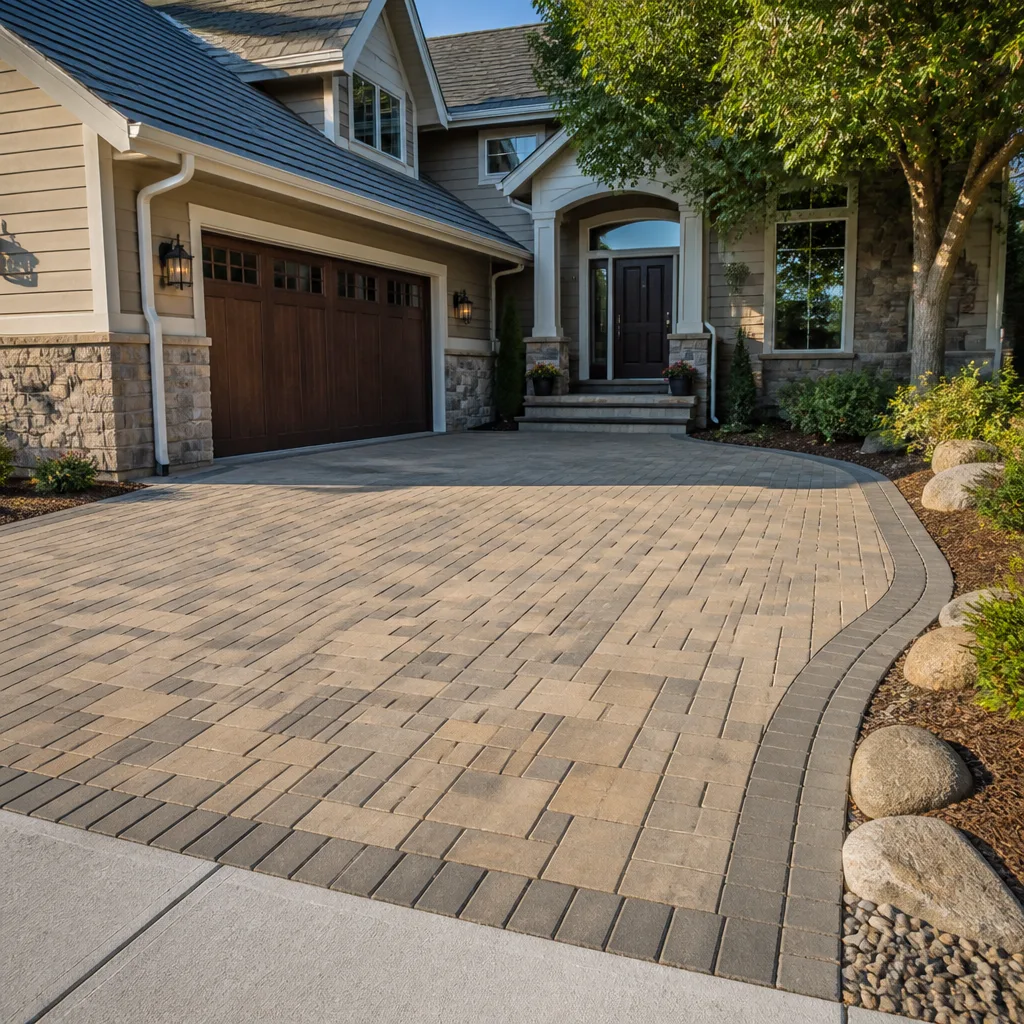
Barrette driveway and paver systems in San Jose typically run $8,260-$21,240 for a full paver installation, and we stock the replacement edge restraints, polymeric sand, and paver units that match Barrette’s dimensional specs. Most San Jose homeowners notice the problem first as shifting pavers after winter rains or UV-crumbling edge spikes in the Almaden Valley sun. We carry Barrette-compatible inventory on our trucks and can usually match your existing pattern and color grade within a single site visit.
The failure usually announces itself gradually. You’ll spot weeds pushing through joints that held clean last season, or a single paver rocking underfoot where the bedding sand has washed out. In older Willow Glen installations, we’ve seen Barrette’s 60mm residential pavers settle unevenly where the original contractor skipped the geotextile fabric layer. The fix is rarely one paver; it’s diagnosing why that paver failed and whether the base course is still intact.
Which Barrette Models This Applies To
Barrette produces several paver lines under the Outdoor Living umbrella, and the part you need depends on when your driveway or patio was installed. Pre-2018 installations in San Jose most commonly used Barrette’s standard 60mm concrete paver in 4″ × 8″ and 6″ × 6″ formats, with “Rustic Red” and “Granite Blend” as the dominant color runs in this market. Post-2018, Barrette shifted toward thicker 80mm units for vehicular load ratings and introduced their “Permeable” series with larger joint gaps for drainage compliance.
To identify your exact match, check the paver edge for a molded “BARRETTE” stamp or measure the unit thickness with a straightedge. The 60mm versus 80mm distinction matters because the two are not interchangeable on the same plane; mixing them creates a trip hazard and voids any manufacturer’s dimensional warranty. We source OEM Barrette where the color run is still active, and when it’s discontinued, we specify equivalent-grade pavers from Belgard or Techo-Bloc with matching ASTM C936 compressive strength ratings (8,000 psi minimum) and comparable surface texture. The aftermarket decision for Barrette specifically hinges on color fade: their older iron-oxide colorants weather differently than competitors’, and a close match today can look mismatched in two San Jose summers.
Signs Your Barrette Driveway & Pavers Is Failing
- Pavers rocking or sounding hollow underfoot. This means the bedding sand has eroded or the base course has settled, often from poor initial compaction or water intrusion through failed edge restraints. The paver itself may be intact, but the substrate beneath it has lost structural support.
- Weeds or moss colonizing the joints. Polymeric sand breaks down under UV exposure and freeze-thaw cycling; once the binder fails, organic matter seeds in the gaps. In San Jose’s mild climate, this typically appears after three to five years if the original installation used standard joint sand rather than polymer-modified.
- Edge restraints pulling away from the perimeter. Barrette’s plastic spike-in edging degrades in direct sun, and the 10″ spikes commonly used in residential work loosen in clay-heavy San Jose soils. When the edge goes, the field pavers migrate outward and the pattern unravels.
- Surface spalling or corner chipping. This indicates either substandard concrete mix (low cement content) or deicing salt damage if the driveway sees winter mountain traffic. Barrette’s residential-grade pavers are particularly susceptible if the original installer sourced from a discounted batch.
- Standing water more than 30 minutes after rain. Properly pitched paver installations drain through the joints and off the edge. Ponding means the base has settled into a bowl, the joints are fully clogged, or the original pitch was insufficient for your specific soil percolation rate.
 Before
 After
AfterReplacement Cost & What’s Included
For Barrette paver repair and replacement in San Jose, our installed pricing follows the ranges below. Every quote is a flat written price with line-item scope; under Clause 1 of the Haven Standard, no work starts until you have that number in hand.
| Service | San Jose Price Range |
|---|---|
| Paver driveway installation (new) | $8,260 - $21,240 |
| Concrete driveway installation | $5,310 - $14,160 |
| Driveway replacement (remove and reinstall) | $5,900 - $16,520 |
| Driveway sealing (maintenance) | $295 - $825 |
| Paver patio installation | $4,130 - $12,980 |
What drives the range: paver unit cost varies by thickness and color availability; base excavation depth depends on whether we hit expansive clay or engineered fill; and access constraints (tight Almaden Valley lots versus open Evergreen properties) affect labor hours. Our quotes include paver removal and disposal, base re-compaction with a plate compactor to 95% standard Proctor density, geotextile fabric if the original was omitted, bedding sand, paver relay with new polymeric sand joints, and edge restraint replacement. The 365-Day Done Right Promise covers the installation. We also provide a documented photo record of the excavated base condition and the finished surface, delivered via email before we leave the site.
DIY or Call Us?
There’s a clear line between what a homeowner can assess and what requires proper equipment. You can safely check: whether the rocking paver lifts out by hand (indicating no edge restraint holding it), whether water drains from a poured bucket within half an hour, and whether the edge spikes are still flush or have backed out an inch.
Where DIY goes wrong: relaying pavers without re-compacting the base simply repeats the failure in six months. Plate compactor rental runs $80-$120 per day in San Jose, and without a moisture-conditioned base layer, you’ll get differential settlement that telegraphs through within two rainy seasons. Polymeric sand application demands a completely dry surface and precise watering activation; we’ve been called to redo homeowner jobs where premature rain dissolved the binder into a hazy surface stain. For edge restraints on vehicular driveways, the 12″ spike depth and 6″ setback from the pavement edge are code-specific; shorter spikes in soft soil pull free under turning loads. If your Barrette installation sees daily vehicle traffic, the base repair is not a weekend project.
Call (669) 271-8644 and we’ll schedule a free estimate with written pricing. Measure twice, permit once, then we talk timeline.
FAQs
Properly installed Barrette concrete pavers last 25-30 years in San Jose’s Mediterranean climate, though surface color fades noticeably after 10-12 years of direct south-facing exposure. The polymeric sand jointing typically requires refresh at 5-7 years, and edge restraints at 8-10 years. Call (669) 271-8644 for an exact quote on your specific condition - estimates are free.
Localized repair is viable when the failure is confined to less than 15% of the total area and the base course beneath is still structurally sound. We excavate the affected section, re-compact the base, and weave in matching pavers. If the base has failed across the field or the color run is discontinued, full replacement is the honest recommendation. Call (669) 271-8644 for an exact quote - estimates are free.
A typical residential driveway repair of 200-400 square feet takes two to three days: one day for removal and base prep, one day for paver relay and joint sanding, and a half day for polymeric sand curing and final compaction. Full replacements run one to two weeks depending on excavation depth and weather. We provide a written timeline with every quote.
We stock Barrette-compatible edge restraints, geotextile fabric, bedding sand, and polymeric sand on our San Jose trucks. Pavers themselves are project-ordered due to color matching requirements, with typical lead times of 5-10 business days for active Barrette lines and 3-4 weeks for discontinued colors requiring aftermarket equivalent sourcing. We confirm availability during your estimate visit and do not start demolition until materials are on-site.
Written by Grant Rowan, Owner, Rowan Construction Group San Jose at Rowan Construction Group San Jose, serving San Jose and nearby areas.