
Last updated September 24, 2026
Free written scope consultation - allowances, timeline, and change-order rules on paper before a single trade is scheduled






 Before
 After
After Before
 After
After Before
 After
AfterKitchen Remodeling Maintenance Checklist for San Jose Homeowners
Most post-remodel kitchen checklists are written by marketers. They tell you to “check your cabinets” with no measurement, no interval, and no description of what failure actually looks like. We’ve written this one backward from our Kitchen Remodeling services warranty claims we’ve processed across 4,000-plus projects since 2007. In San Jose, the specific combination of mild humidity swings, hard water averaging 200-300 ppm, and seismic movement creates failure modes that generic checklists miss entirely. What follows is an 18-month inspection schedule with pass-fail criteria you can verify with a flashlight and a quarter.
Quick Answer
A properly maintained kitchen remodel in San Jose requires structured inspections at 30 days, 6 months, and annually through month 18. Key tasks include verifying grout cure with a tap test, checking cabinet hinge tension at manufacturer spec, monitoring hard-water mineral buildup in fixtures, and inspecting stone countertop seams for seismic movement beyond 1/32 inch. Document everything; manufacturer warranties from Kohler, Silestone, and Miele require maintenance records for claims.
Table of Contents
- The 30-Day Inspection: What Grout, Caulk, and Hinges Reveal
- San Jose Hard Water: 6-Month Fixture and Supply Line Checks
- Annual Seismic Inspection: Cabinets, Countertops, and Movement
- Material-Specific Care: Quartz, Granite, Cabinets, and Flooring
- What Voids Manufacturer Warranties: Kohler, Silestone, Miele
- Documentation That Protects Your Investment
- Common Mistakes to Avoid
- When to Call a Professional
- Frequently Asked Questions
 Before
 After
AfterThe 30-Day Inspection: What Grout, Caulk, and Hinges Reveal
Thirty days after final walkthrough, your kitchen has completed its first full thermal cycle and moisture exposure. This is when installation defects announce themselves. We schedule our 30-day follow-ups at this interval because the data is clear: problems found here cost 10% of what they cost at 6 months.
Grout Cure Verification: The Tap Test
Portland cement grout takes 28 days to reach design strength. Premature foot traffic or aggressive cleaning can leave voids beneath the surface. Here’s the test we use:
- Tap the grout lines with the plastic handle of a screwdriver, not metal.
- Solid grout produces a sharp, high-pitched click. Hollow spots sound dull and resonant.
- Mark hollow areas with painter’s tape. More than three hollow spots in a 20-square-foot area indicates inadequate cure or application.
- Photograph the marked areas with a ruler in frame for scale.
In San Jose’s mild climate, grout cure is rarely interrupted by freeze-thaw, but the dry summers can accelerate surface skinning before full cure. If you ran your HVAC aggressively during the first two weeks, check especially near vents where rapid moisture loss occurs. Hollow grout will crack within 12 months under normal flex. Regrouting now is a 2-hour repair; at 6 months, it requires removal to substrate.
Cabinet Hinge Tension at Manufacturer Spec
Most semi-custom and custom cabinets installed in San Jose use Blum or Salice hinges with integrated soft-close. The factory setting for self-close initiation is typically 45° from closed. Check this:
- Open the door to 90° and release. It should begin self-closing between 45° and 30°.
- If it drops freely past 30°, the tension screw needs 1/4 turn clockwise.
- If it resists closing from 45°, the hinge is over-tensioned and will stress the screw cups in MDF or particle board face frames.
- Test all hinges; adjustment takes 15 minutes and prevents the stripped screw holes we see in warranty calls.
IKEA cabinet systems use a different mechanism: the Utrusta hinge has a damping adjustment wheel, not a tension screw. Turn it toward the “+” symbol for heavier doors, “-” for lighter. We’ve replaced dozens of IKEA cabinet doors in Willow Glen and Almaden Valley where homeowners forced misadjusted hinges until the press-fit dowels failed.
Caulk Bead Integrity at Countertop-to-Wall Joints
Silicone caulk at the backsplash-to-countertop joint is your moisture barrier. Inspect with raking light from a flashlight held parallel to the surface:
- Continuous bead, no bubbles or breaks? Pass.
- Any separation, even hairline, at either substrate? Fail - re-caulk before first heavy cleaning.
- Shiny surface or matte? Shiny indicates uncured or improper product; kitchen caulk should be neutral-cure silicone, not acrylic latex.
San Jose’s humidity swings are mild compared to coastal California, but the Santa Clara Valley still sees 30% relative humidity in summer and 70% in winter. That 40-point swing is enough to open a poorly bonded caulk line. We specify GE Silicone II or equivalent for this joint; acrylic latex “kitchen and bath” products fail within 8 months here.
San Jose Hard Water: 6-Month Fixture and Supply Line Checks
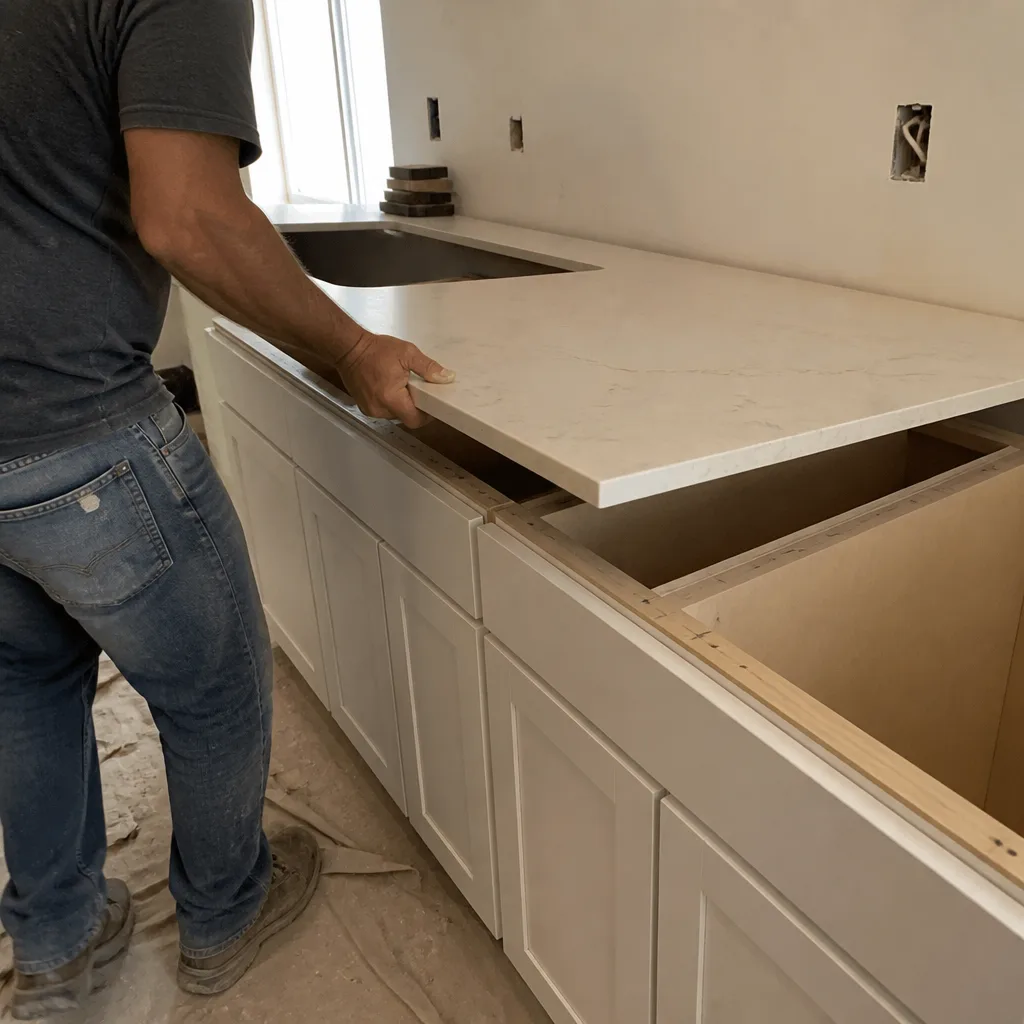
San Jose Municipal Water System reports total hardness of 200-300 ppm as CaCO3, with some eastern wells exceeding 350 ppm. That’s moderately hard to hard. At 6 months, the effects are visible but not yet destructive. This is your maintenance window.
Aerator Sediment Buildup in Kohler and Moen Fixtures
Remove the aerator from each faucet by hand or with channel locks wrapped in tape. Hold it to light:
- White or tan crystalline deposits? Calcium carbonate. Soak in white vinegar for 30 minutes, brush with old toothbrush, rinse.
- Black grit? Likely from galvanized supply lines in pre-1980 homes, common in Naglee Park and parts of Japantown. This indicates pipe degradation upstream, not fixture failure.
- Green-blue staining? Copper corrosion from acidic water or galvanic reaction. Call a plumber; this progresses to pinhole leaks.
Kohler specifies in their warranty documentation that aerator cleaning is owner maintenance; failure to clean annually can void finish warranties on Forté and Devonshire lines. Moen’s cartridge warranties are similarly conditional. Document your cleaning with dated photos.
Dishwasher Door Gasket Mineral Deposit Check
The bottom door gasket on Bosch, Miele, and KitchenAid units traps hard water during cycles. At 6 months:
- Run your finger along the gasket’s sealing face. White crust indicates mineral buildup that will eventually prevent full seal.
- Wipe with vinegar-dampened cloth, then dry.
- Inspect the gasket for nicks or compression set (permanent flattening). Compression set at 6 months suggests overloading or improper detergent - the door is being forced against a full rack.
Miele’s warranty explicitly excludes “damage caused by water conditions outside published specifications.” Their published hardness limit is 270 ppm. Eastern San Jose homeowners exceeding this should consider a softener or accept that gasket replacement becomes periodic maintenance, not warranty.
Under-Sink Supply Line Inspection
With a flashlight and small mirror, inspect the compression fittings at angle stops and faucet connections:
- White or green crust at ferrule or nut? Calcium deposit from weeping connection. Tighten 1/4 turn; if crust returns, replace the ferrule and reseat.
- Corrosion on braided stainless exterior? The braid is cosmetic; corrosion indicates chloride exposure from cleaning products. Replace with polymer-coated supply line.
- Any moisture on cabinet floor? Even small amounts indicate active leak. Place paper towel beneath for 24 hours to confirm source.
We’ve documented photo records of cabinet floor damage in Los Gatos and Saratoga homes where homeowners ignored 6-month weeping for 18 months. The particle board subfloor delaminates, and the repair requires cabinet base replacement. Under Clause 1 of the Haven Standard, our written price covers this only if reported during warranty period.
Annual Seismic Inspection: Cabinets, Countertops, and Movement
San Jose lies within USGS Seismic Design Category D, the second-highest classification. The 1989 Loma Prieta earthquake caused $6 billion in regional damage, much of it from unsecured contents and improperly anchored built-ins. Your kitchen remodel included seismic bracing; this inspection verifies it remains effective.
Upper Cabinet Blocking Verification
Upper cabinets must be secured to wall studs through a continuous back rail or blocking strip, not just drywall toggles. Annual inspection:
- Empty one cabinet section and locate the mounting screws through the back panel (usually visible as filled holes or slight dimples).
- Verify screws are centered on studs by measuring 16 inches on center from a known stud location (outlet boxes are typically attached to studs).
- Check that the cabinet back remains flush to wall; any gap wider than 1/16 inch at top or bottom indicates stud movement or screw withdrawal.
- Test by grasping the cabinet face frame and applying moderate upward pressure. Movement means the blocking has failed or was never properly installed.
In our experience across San Jose, the most common failure is in 1950s-1970s tract homes in Cambrian Park and Blossom Valley where original construction used 24-inch stud spacing and remodelers didn’t add blocking. We’ve seen 36-inch wall cabinets tear away with 200 pounds of load in simulated shake table testing. Proper blocking is two 2x4s sistered between studs, not a single 1×4.
Stone Countertop Seam Movement
Quartz and granite countertops in lengths over 96 inches require seams. These are bonded with color-matched epoxy and should remain virtually invisible. Annual check:
- Clean the seam with acetone to remove residue.
- Hold a flashlight raking across the seam surface.
- Any gap visible to naked eye? Measure with feeler gauge or business card (0.010 inch). Pass is 0.000-0.031 inch (1/32 inch).
- Gap beyond 1/32 inch, or any vertical displacement? The substrate or cabinets have moved. Do not attempt DIY repair; epoxy injection requires controlled conditions.
Seismic movement in San Jose is typically small-amplitude, high-frequency - the kind that fatigues adhesives over years rather than causing sudden failure. We’ve reseamed Cambria countertops in Almaden Valley homes where 15 years of micro-movement opened seams to 1/16 inch. The repair requires slab removal and factory re-fabrication; cost typically exceeds $2,000. Early detection at annual inspection allows stabilization before full failure.
Tile Backsplash Grout Line Integrity
Backsplash tile is vulnerable to shear stress where countertop and wall move independently. Annual inspection:
- Grout cracks following a horizontal line at countertop level indicate differential movement. This is cosmetic if caught early; structural if water penetrates.
- Grout cracks in a vertical or diagonal pattern suggest substrate movement or inadequate thinset coverage. Tap test as described in 30-day section.
- Any loose tile? The bond has failed; remove and reset before water intrusion damages drywall.
Material-Specific Care: Quartz, Granite, Cabinets, and Flooring
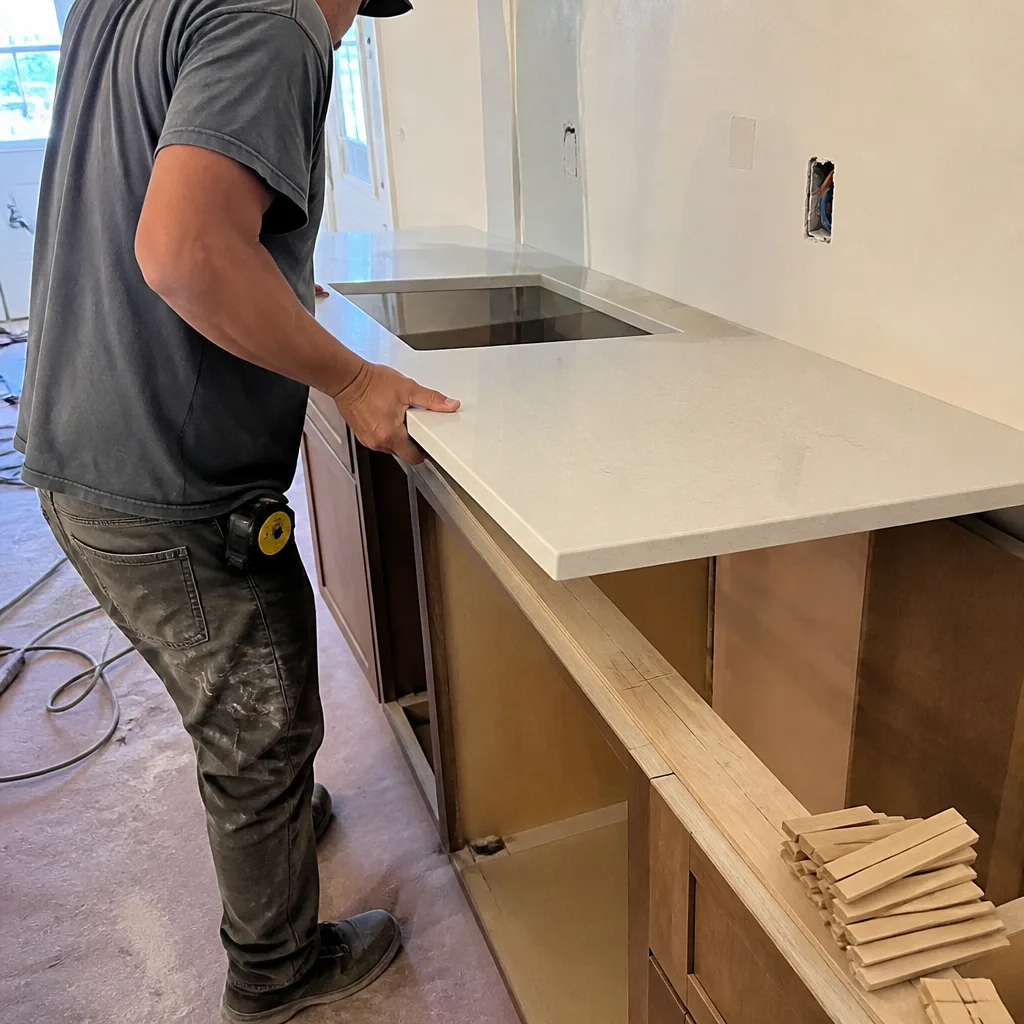
San Jose remodels cluster around specific material combinations driven by price point and availability. Maintenance requirements vary significantly; applying granite care to quartz or hardwood protocols to LVP causes damage we see in warranty disputes. For more guidance, see our Complete Guide to Construction in San Jose.
Quartz vs. Granite Sealing Schedules
Quartz (engineered stone, e.g., Silestone, Caesarstone, Cambria) is non-porous and requires no sealing. Annual maintenance is warm water and pH-neutral cleaner. The most common damage we see is etching from citrus or wine left overnight - the resin binder is vulnerable to acids below pH 4. Silestone’s warranty excludes “damage from exposure to strong acids or alkalis.” This means lemon juice, vinegar, and some grout haze removers.
Granite is porous and requires sealing. Frequency depends on the specific stone:
- Black granites (Absolute Black, Black Galaxy): dense, seal every 3-5 years. Test by dropping water on surface; if it beads, sealer is intact. If it darkens the stone in 10 minutes, reseal.
- White or light granites (Kashmir White, Colonial White): porous, seal annually. These stain visibly with coffee, wine, or oil within hours.
- Exotic granites (Blue Bahia, Labradorite): variable, test annually. Many are resin-treated at factory and require specific sealers; generic “granite sealer” can cause hazing.
In San Jose’s climate, UV exposure through south-facing windows can degrade resin binders in quartz over 10+ years. We’ve seen yellowing in Cambria Brittanicca installations in Willow Glen with unshaded western exposure. Manufacturer warranty covers this only with documentation of UV-filtering film or shade installation.
IKEA vs. Semi-Custom Cabinet Adjustment Procedures
IKEA SEKTION cabinets use a 32mm system with adjustable shelf pins, hinge plates, and drawer fronts. The particle board core is moisture-sensitive; swelling from sink leaks is irreversible. Annual adjustment:
- Drawer front alignment: loosen the four front screws, adjust for even reveals, retighten. The locking mechanism strips if overtightened; use a manual screwdriver for final turn.
- Door vertical adjustment: the hinge plate has elongated slots; loosen, shift, retighten. Doors settle in first 6 months as house framing adjusts to new load.
- Shelf pin holes: if pins loosen, wrap with teflon tape or replace with 5mm hardwood dowel. Do not use larger pins; they split the particle board.
Semi-custom lines (KraftMaid, Wellborn, CliqStudios) use plywood boxes and hardwood face frames. Hinge adjustments are similar but the substrates tolerate more correction. Drawer glide adjustment varies by hardware: Blum Tandem plus Blumotion has side-to-side and tilt screws accessible behind the drawer front. Wellborn’s standard glide has fewer adjustments but greater weight capacity.
We’ve replaced water-damaged IKEA cabinets in downtown San Jose condos where homeowners attempted to “fix” swollen particle board with wood filler and paint. The repair is visible and temporary; replacement is the only solution. Document any leak immediately for insurance and warranty purposes.
LVP vs. Hardwood Expansion Gap Maintenance
Luxury Vinyl Plank (LVP) and hardwood both float or nail over subfloor, but their expansion behaviors differ:
- LVP (Coretec, Mannington, Shaw): dimensionally stable, minimal expansion. The required perimeter gap is 1/4 inch, often hidden by baseboard. Annual check: verify no planks have shifted to close gaps at transitions. If they have, the locking mechanism has failed or the subfloor has moisture issues.
- Solid hardwood (oak, maple, walnut): expands and contracts with humidity. Required gap is 1/2 to 3/4 inch, typically covered by shoe molding. In San Jose, the 40-point humidity swing means 1/8 inch seasonal movement in a 12-foot run. Annual check: gaps at transitions should open in summer, close in winter. Consistent gap year-round indicates the floor is pinned somewhere and will buckle eventually.
We’ve repaired buckled hardwood in Los Altos and Mountain View homes where homeowners installed cabinets on top of floating floors - the floor couldn’t move and failed at its weakest point. The fix requires cabinet removal, floor repair, and proper installation. Under the Haven Standard, we document this condition during initial consultation and include proper sequence in our written scope.
What Voids Manufacturer Warranties: Kohler, Silestone, Miele
Manufacturer warranties are insurance policies with specific exclusions. Understanding them prevents costly assumptions. We’ve processed warranty claims across these three brands specifically; the patterns are consistent.
Kohler: Fixture Finishes and Cartridges
Kohler’s limited lifetime warranty covers manufacturing defects in faucets, not damage from use or environment. Specific voids:
- Finish damage from abrasive cleaners, scouring pads, or acid-based lime removers. The Vibrant PVD finishes are thin; once compromised, corrosion proceeds rapidly in hard water.
- Cartridge failure from sediment accumulation. The warranty states “normal maintenance including aerator cleaning is the owner’s responsibility.” A seized cartridge with sediment in the aerator is denied.
- Installation by non-licensed plumber in jurisdictions requiring it. San Jose requires licensed plumbing contractors for fixture replacement; DIY installation voids warranty if permit wasn’t pulled.
Safe DIY: aerator cleaning, cartridge replacement with genuine Kohler parts (not aftermarket), O-ring lubrication with silicone grease. Not safe: attempting to re-plate a finish, drilling out a seized set screw, or using CLR or Lime-A-Way on brushed nickel or oil-rubbed bronze.
Silestone: Surface Integrity
Silestone’s 25-year warranty covers structural defects, not surface damage. Specific voids:
- Scratches deeper than surface polish. Quartz is hard (Mohs 7) but not scratch-proof; diamond rings, ceramic knives, and dropped cookware damage it. This is “physical damage,” not defect.
- Thermal shock from pots over 300°F placed directly on surface. The warranty specifies use of trivets; we document this in our project closeout packet.
- Damage from improper cleaners: anything with pH outside 5-9, or containing bleach, ammonia, or abrasives. The “Silestone cleaner” requirement is real; we’ve seen warranty denials for Windex and 409 use.
- Seams repaired by non-certified fabricator. Silestone maintains a certified fabricator network; DIY or handyman epoxy work voids the seam warranty.
Safe DIY: daily cleaning with pH-neutral product, prompt spill cleanup, use of cutting boards and trivets. Not safe: attempting to polish scratches with automotive compounds, applying heat to “pop” chips, or using two-part epoxy color kits from hardware stores.
Miele: Appliance Performance
Miele’s warranty is comprehensive but conditional on installation and maintenance:
- Dishwasher: warranty requires water hardness below 270 ppm and use of Miele salt and rinse aid in hard water areas. Eastern San Jose homeowners without softeners may be denied pump or heating element claims.
- Refrigeration: compressor warranty requires 2-inch clearance on sides and top, verified by installation photos. Built-in installations with custom panels must maintain manufacturer-specified ventilation; we’ve seen denials where cabinet maker enclosed the unit.
- All appliances: service must be performed by Miele-authorized technician. Independent repair voids warranty regardless of competence.
Safe DIY: filter replacement, descaling with Miele product, door seal cleaning. Not safe: any electrical or refrigerant work, compressor replacement attempts, or use of non-Miele water filters.
Documentation That Protects Your Investment
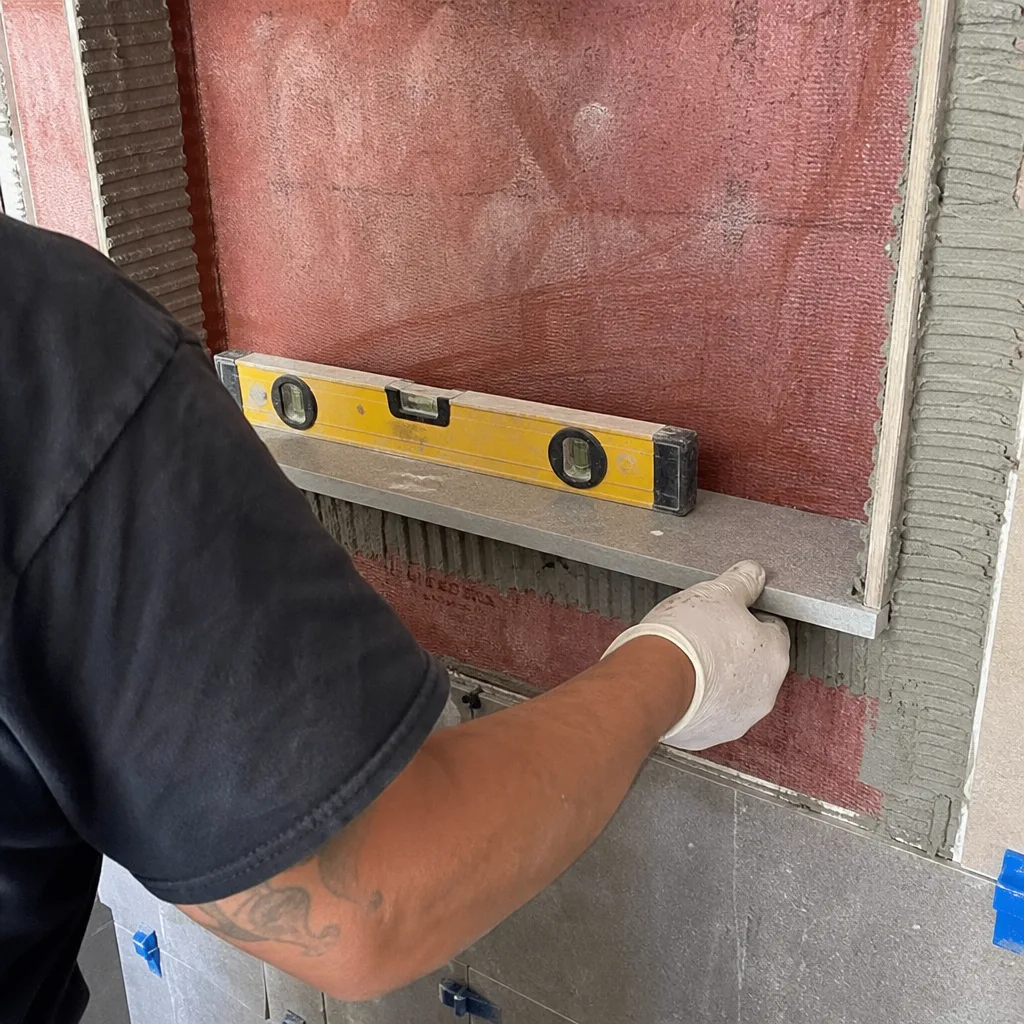
Every kitchen remodeling in San Jose we complete includes a documented photo record as standard, not an upgrade. This isn’t marketing; it’s the evidence chain that makes warranties enforceable and insurance claims successful. Here’s what you should maintain independently:
- Purchase receipts with model and serial numbers. Screenshot online orders; fade-resistant ink on paper receipts degrades in 2-3 years.
- Installation documentation. Permit final cards, inspection sign-offs, contractor invoices with scope description. San Jose requires permits for electrical, plumbing, and structural work; unpermitted work voids most manufacturer warranties and complicates resale.
- Maintenance log with dated photos. Annual inspection photos with timestamp, brief description, any corrective action. Cloud storage with automatic backup; local drives fail.
- Correspondence record. Email chains with contractors, manufacturer service calls, warranty claim submissions. Voice calls should be confirmed in writing.
The 365-Day Done Right Promise from Rowan Construction Group includes a project archive: your photos, permits, and correspondence stored for 7 years. Explore more guides & resources on our blog. But we recommend homeowners maintain parallel records. When a Miele compressor fails in year 4 and Miele requests installation verification, having your own documentation prevents delay.
In our experience, the homeowners who recover full warranty value are those who treated documentation as seriously as the purchase decision. The ones who don’t? They call us for a repair quote because they can’t prove the defect wasn’t caused by misuse.
Common Mistakes to Avoid
- Using vinegar on everything. It’s effective for hard water but etches marble, degrades grout sealer, and voids Silestone’s warranty. Match cleaner to material, not convenience.
- Ignoring the 30-day window. Defects visible at 30 days are installation errors, covered by contractor warranty. At 6 months, the same defect may be attributed to use or maintenance. Inspect early and document.
- Assuming “lifetime warranty” means your lifetime. Manufacturer lifetime warranties typically cover original purchaser only and transfer with specific registration steps. Kohler’s lifetime warranty becomes 10-year when transferred; Silestone’s 25-year becomes 10-year. Register immediately if you plan to sell.
- Sealing quartz. We’ve seen homeowners apply granite sealer to quartz because “stone needs sealing.” The sealer sits on the resin surface, attracts dirt, and requires professional stripping. Quartz never needs sealing.
- Overloading IKEA cabinets before adjustment. New IKEA cabinets settle; hinge and drawer adjustments at 30 days prevent stress failures. Loading fully before adjustment guarantees misalignment that compounds over time.
- Neglecting seismic bracing inspection. San Jose’s microseisms are constant and cumulative. Annual verification takes 10 minutes; failure during a significant event can cause injury and void insurance if maintenance was neglected.
- DIY warranty repairs on complex items. Replacing a Kohler cartridge is reasonable; attempting to reface a brushed nickel finish or inject epoxy under a quartz seam is not. The cost of professional repair is typically less than the voided warranty value.
When to Call a Professional
Call a licensed contractor when you find structural movement (cabinet blocking failure, countertop seam separation beyond 1/32 inch), active water damage with unclear source, or any condition that affects safety or warranty coverage. Rowan Construction Group San Jose home offers free estimates in San Jose - call (669) 271-8644. We provide line-item written quotes before any work begins, and our Free Second Opinion on any written estimate means you can bring a competitor’s quote for independent review at no charge. Every visit includes a documented photo record, and all technicians are background-checked and uniformed.
Frequently Asked Questions
Annual maintenance for a typical San Jose kitchen remodel runs $150-$400 in materials and 4-6 hours of homeowner labor, or $300-$600 if hiring a handyman for the annual inspection. Major items: granite sealing ($80-$150 if contracted), fixture aerator replacement ($15-$40 parts), and professional grout repair if needed ($200-$500 per area). Call (669) 271-8644 for an exact quote on any repair - estimates are free.
Under Clause 1 of the Haven Standard, Rowan Construction Group delivers a written flat price before any work begins. No change proceeds without a signed change order. This discipline has kept our projects within a few percent of the agreed cost across 4,000-plus jobs since 2007. If we find concealed damage during repair, we document it with photos, provide a revised written price, and require your signature before continuing.
Permits are required in San Jose for electrical, plumbing, and structural work, including cabinet blocking modifications, outlet additions, and gas line adjustments. Cosmetic work - sealing, cleaning, minor grout repair - does not require permits. We pull all required permits as part of our scope and schedule inspections; the permit card and final sign-off are included in your project documentation.
A properly constructed kitchen remodel in San Jose should require only routine maintenance for 10-15 years. Major components: cabinets 20-30 years, quartz countertops 25+ years, granite with proper sealing 30+ years, appliances 10-15 years depending on brand and use. The first 18 months reveal installation quality; after that, longevity depends on maintenance discipline and local conditions - hard water, seismic activity, and UV exposure being the primary San Jose factors.
Handyman services are appropriate for cleaning, sealing, and minor adjustments. Licensed contractor work is required for plumbing, electrical, structural modifications, and any permit-triggering activity. In San Jose, unlicensed plumbing or electrical work voids manufacturer warranties and may invalidate your homeowner’s insurance if damage occurs. Verify license status at cslb.ca.gov before hiring.
Eastern San Jose neighborhoods including Alum Rock, Evergreen, and parts of Berryessa draw from deeper wells with hardness regularly exceeding 300 ppm. This accelerates aerator clogging, dishwasher gasket mineralization, and supply line weeping. Homeowners in these areas should inspect at 3 months rather than 6 for the first cycle, and consider whole-house or point-of-use softening for Miele appliances specifically.
The Bottom Line
A kitchen remodel in San Jose represents a significant investment in a specific climate and seismic environment. The maintenance that protects it is structured, scheduled, and documented - not generic advice applied when something breaks. Inspect at 30 days for installation defects, at 6 months for hard water effects, and annually for seismic integrity. Match your care to your materials: quartz needs no seal, granite does, and neither tolerates improper cleaners. Maintain records that make warranties enforceable. The homeowners who recover full value from their remodels are those who treat the first 18 months as critically as the selection process.
Written by Grant Rowan, Owner at Rowan Construction Group San Jose, serving San Jose since 2007.